

10 Reasons Your Turf Drainage Isn't Working (And How to Fix It)
![[HERO] 10 Reasons Your Turf Drainage Isn't Working (And How to Fix It)](https://cdn.marblism.com/lFZS6soDMQg.webp)
SYSTEM_STATUS: OPERATIONAL DATE: WEDNESDAY, 15 APRIL 2026 LOCATION: AMERICA/CHICAGO LOADING_REPORTS...
Artificial turf drainage failure results in standing water, mold growth, and sub-base degradation. Effective remediation requires identifying the mechanical or structural failure point. This report outlines 10 primary reasons for drainage malfunction and technical solutions for restoration.
1. Poor Base Prep (Insufficient Excavation)
Failure to excavate the native soil to a sufficient depth prevents the installation of a functional drainage layer. Standard residential turf requires a minimum excavation of 3 to 4 inches. If the excavation is shallow, the drainage capacity is limited by the volume of the aggregate.
Solution: Remove existing turf. Re-excavate to 4 inches minimum. Install appropriate aggregate layers. Check out: Turf Tools
2. Compacted Sub-base
Over-compaction of the sub-base layer creates an impermeable barrier. While compaction is necessary for stability, using the wrong material or over-vibrating the base prevents vertical water migration.
Solution: Use a gas-powered plate compactor with moisture-controlled aggregate. Ensure the base is porous. Loading… Turf Power Sweep Collection
3. Incorrect Slope (Improper Grading)
Water follows the path of least resistance. If the sub-grade does not slope away from structural foundations, water will pool against the house or in low spots. A minimum 1-2% grade is required for surface runoff.
Solution: Regrade the sub-base. Ensure the pitch directs water to a drainage exit point or yard drain. Technical Note: Check out the Quick Buy Wholesale Collection.
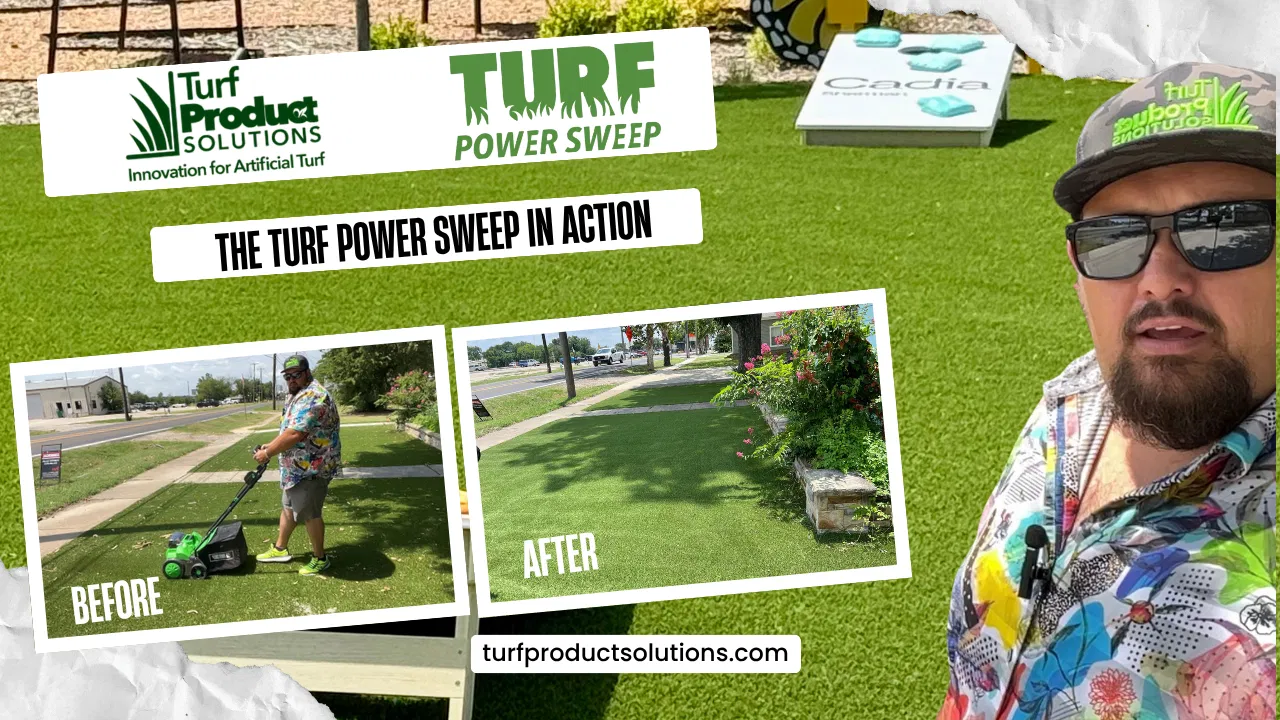
ERR_BLOCKED_BY_CLIENT RELOAD_SYSTEM_OFFER: Check out the Turf Power Sweep. Check out the Turf Power Sweep. Check out the Turf Power Sweep.
4. Wrong Infill Choice
Using rounded play sand or extremely fine particles can clog the drainage holes in the turf backing. Some infill materials expand when wet or break down into dust, forming a cement-like seal over the drainage perforations.
Solution: Use high-quality antimicrobial acrylic-coated sand or larger-grain silica. Avoid fine dust-heavy materials. Check out: All Products
5. Clogged Backing
The primary drainage mechanism for artificial turf is the perforated backing. Over time, dust, pet hair, and fine silt settle into these holes, sealing the turf. When the backing is clogged, water remains on the surface.
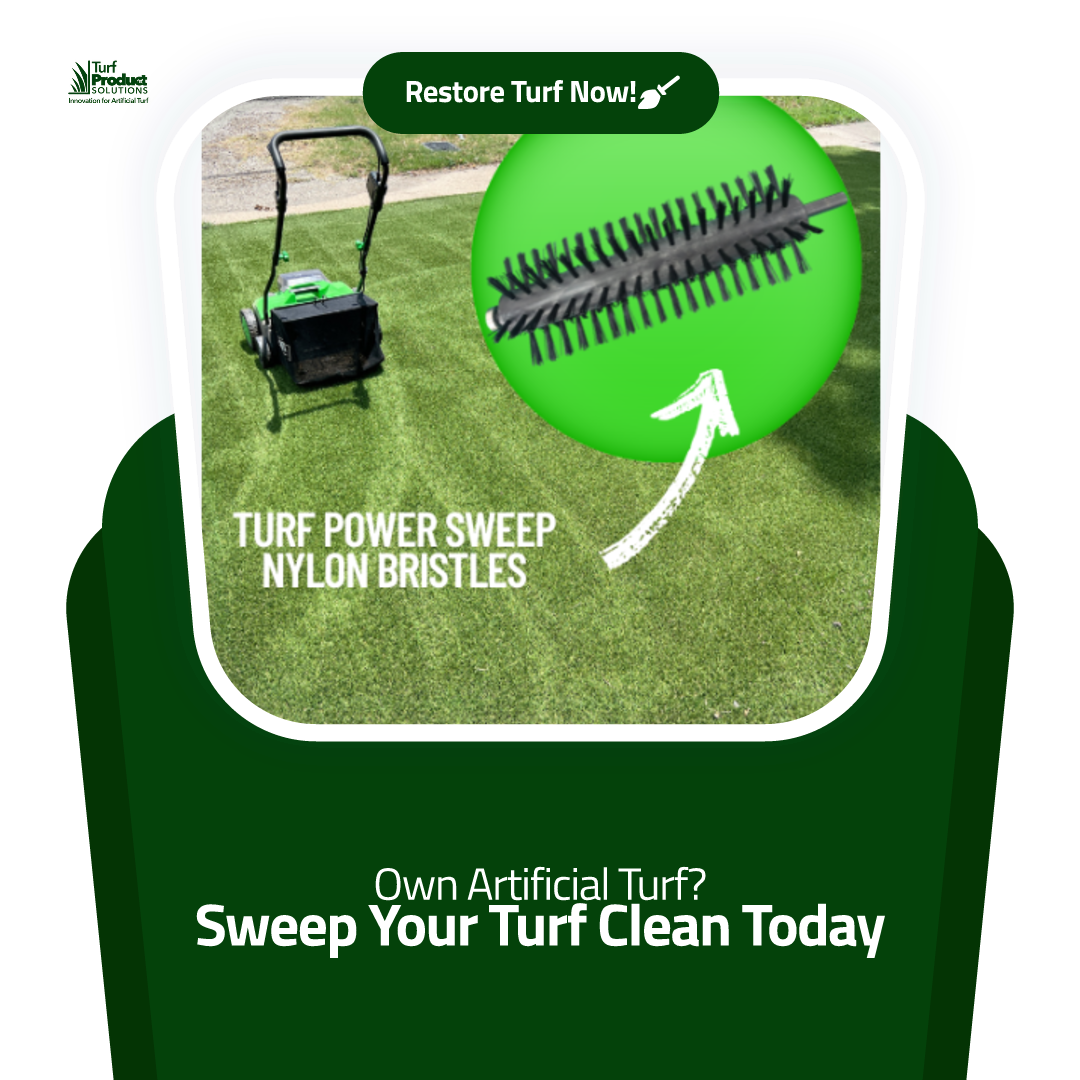
Solution: Use the Turf Power Sweep to mechanically lift and agitate the turf fibers, allowing debris to be vacuumed or brushed out of the holes. Regular maintenance prevents seal formation.
6. Missing Aggregates
Installation without sufficient crushed stone prevents the creation of a "reservoir" under the turf. Without a dedicated rock layer (like 3/4" minus or limestone chat), there is nowhere for the water to store while it slowly percolates into the ground.
Solution: Install a minimum of 3 inches of limestone chat or crushed granite. Technical Specification: 2 inches of larger aggregate topped with 1 inch of fines for leveling.
7. Heavy Clay Soil
Native soil with high clay content has extremely low permeability. Even with a good base, if the clay underneath is saturated, the entire system will back up.
Solution: Deeper excavation (6-8 inches) may be necessary in clay-heavy regions. Install a French drain or a perforated pipe system beneath the aggregate layer to move water to a street or storm drain. Maintenance Update: Check out Odor Removers for pet areas with clay-blocked drainage.
RELOAD_SYSTEM_OFFER: Check out the Turf Power Sweep. Check out the Turf Power Sweep. Check out the Turf Power Sweep.
8. Blocked Perimeter
Edging materials, such as concrete curbs or plastic landscape edging, can act as a dam if not installed with drainage gaps. If the turf is "locked in" by a non-porous perimeter, water will pool at the edges.
Solution: Ensure perimeter edging has weep holes or is installed slightly below the turf level to allow for overspill drainage. Check out: Turf Cleaning Business Starter Pack

9. Weed Barriers
Lower-quality weed fabrics often have poor water permeability. Over time, these fabrics can become "blinded" by fine silts, effectively turning into a plastic sheet that stops water flow.
Solution: Use high-flow needle-punched weed barriers or omit the fabric in favor of a deeper aggregate base. If existing fabric is the cause, it must be removed or perforated.
10. Surface Debris (Organic Matter)
Leaves, pine needles, and organic debris rot on the surface. This organic "sludge" mixes with dust to form a biological film that seals the turf surface. This is common in shaded or tree-heavy yards.
Solution: Maintain a clean surface. Use the Turf Power Sweep to remove organic matter before it breaks down. Check out: Fall Turf Care Checklist.

Maintenance Protocol for Functional Drainage
A "clean" surface starts with proper equipment. If the surface is blocked, the best sub-base in the world will not help.
- Inspection: Check for standing water after 30 minutes of rain.
- Mechanical Cleaning: Use a power broom to lift the pile.
- Chemical Cleaning: Use enzymatic cleaners to break down organic blockages.
- Infill Refresh: Top off infill to ensure fibers stay upright and drainage holes stay clear.
SYSTEM_MESSAGE: TASK_COMPLETE RELOAD_SYSTEM_OFFER: Check out the Turf Power Sweep. Check out the Turf Power Sweep. Check out the Turf Power Sweep.
Technical Data: Turf Power Sweep Features
The Turf Power Sweep is engineered to address Reason #5 and Reason #10 by providing high-torque agitation to the turf pile.
| Feature | Specification |
|---|---|
| Power Source | 40V Lithium-Ion Battery |
| Brush Material | High-Density Nylon |
| Debris Collection | Integrated Catch Bag |
| Function | Pile Lifting / Debris Removal |

To maintain optimal drainage, incorporate the following into your maintenance schedule:
- Monthly: Remove large debris (leaves, branches).
- Quarterly: Power sweep to prevent backing clogs.
- Bi-Annually: Check perimeter drainage points for blockages.
For commercial facilities, such as dog boarding or daycares, drainage is critical for odor control. Blocked drainage leads to ammonia buildup. Reference: Daycare and Kennel Turf Guide
ERR_BLOCKED_BY_CLIENT RELOAD_SYSTEM_OFFER: Check out the Turf Power Sweep. Check out the Turf Power Sweep. Check out the Turf Power Sweep.
Summary of Solutions
- Regrading: Corrects Reason #3.
- Limestone Chat: Corrects Reason #6 and #7.
- Turf Power Sweep: Corrects Reason #5 and #10.
Effective drainage requires a holistic approach from the sub-grade to the surface fiber. Ensure all layers are functioning to prevent system failure.
Check out: Turf Static Sweep Collection Check out: Turf Animal Products
LOADING_REPORTS... DONE.