

Why Does Artificial Turf Smell Worse in Summer? (The Science of Pet Urine & Heat)
![[HERO] Why Does Artificial Turf Smell Worse in Summer? (The Science of Pet Urine & Heat)](https://cdn.marblism.com/t3LRTy9vSQo.webp)
SYSTEM STATUS: OPERATIONAL TOPIC: THERMAL IMPACT ON SYNTHETIC TURF ODORS
Introduction to Thermal Retention
Artificial turf is composed of synthetic fibers, primarily polyethylene, polypropylene, or nylon. These materials are non-porous. Unlike natural grass, which undergoes transpiration to cool itself, synthetic turf absorbs and retains solar radiation. During summer months, surface temperatures on artificial grass can reach 120°F to 150°F. This thermal retention is the primary driver for increased odor intensity from pet urine.

The Chemistry of Pet Urine
Pet urine contains urea, salts, and proteins. Urea [(NH2)2CO] is a colorless crystalline compound. In a controlled environment, urea is relatively odorless. However, when pet urine enters the turf system, it settles into the infill and the backing material.
PROCESS_ID: UREA_BREAKDOWN
- Pet eliminates waste on turf surface.
- Liquid penetrates the infill layer.
- Urea remains trapped in the backing and drainage layers.
- Urease-producing bacteria begin the decomposition process.
Heat as a Chemical Catalyst
In the science of chemistry, heat acts as a catalyst for reaction rates. The Arrhenius equation states that chemical reactions accelerate as temperature increases.
Summer Impact:
- High temperatures accelerate the bacterial growth cycle.
- Bacterial enzymes (urease) break down urea into ammonia (NH3) and carbon dioxide (CO2) at a faster rate.
- Increased molecular kinetic energy causes ammonia molecules to move rapidly.
Fall/Winter Impact:
- Lower temperatures slow down bacterial metabolism.
- Chemical conversion of urea to ammonia is inhibited.
- Ammonia remains in a liquid or solid salt state rather than a gas.
Tired of Turf Odors? Eliminate Turf Odors Today. Check out our solutions: https://turfproductsolutions.com/pages/quick-buy
Volatilization and Gas Release
Volatilization is the process where a substance changes from a liquid or solid to a gas. Ammonia is a highly volatile compound. As the summer sun heats the artificial turf, the ammonia trapped in the infill reaches its boiling point or increases its vapor pressure.
STATUS: ODOR_LEVEL_CRITICAL
- 120°F+ surface temperatures trigger rapid off-gassing.
- Ammonia gases rise from the turf backing through the fibers.
- The human olfactory system detects these concentrated gases more easily in warm air.
In contrast, during winter, the ammonia stays "locked" in the turf. The low thermal energy prevents the gas from rising, which is why homeowners rarely notice smells during the cooler months.

The Humidity Factor
Humidity refers to the amount of water vapor in the air. High humidity levels in summer exacerbate turf odors through two mechanisms:
- Moisture Retention: Humidity prevents the turf from drying out completely. This provides a moist environment for odor-causing bacteria to flourish.
- Odor Trapping: Water vapor in the air can "trap" odor molecules near the ground surface. This creates a localized "bubble" of ammonia smell in your backyard.
ERR_BLOCKED_BY_ODOR If you are experiencing heavy ammonia smells, the system requires immediate intervention.
Why Drainage Matters
Poor drainage in artificial turf systems leads to standing liquid in the sub-base. In summer, this stagnant "urine pool" underneath the turf becomes a breeding ground for bacteria.
- Inadequate Drainage: Traps urine; heat cooks the liquid; ammonia gas is released continuously.
- Proper Drainage: Moves urine through the system; reduces the volume of urea available for breakdown.
The Solution: Turf Animal Live Enzyme Formula
Standard cleaners and water rinses are often insufficient in summer heat. Water alone can actually increase humidity and accelerate bacterial growth if not paired with an antimicrobial agent.
Turf Animal Stain & Odor Remover utilizes live enzyme technology.
FUNCTION: BIO-REMEDIATION
- Enzymatic Action: Enzymes physically break the chemical bonds of urea.
- Live Bacteria: Non-pathogenic "good" bacteria consume the organic waste.
- ZapGuard Technology: Specifically engineered to neutralize the static and chemical bonds that hold odors to synthetic fibers.

Comparing Seasonal Maintenance Requirements
Summer Protocol:
- Frequent application of Turf Animal.
- Weekly rinsing to lower surface temperatures.
- Monitoring of high-traffic "potty spots."
- STATUS: ACTIVE_MAINTENANCE
Fall/Winter Protocol:
- Monthly application of Turf Animal.
- Natural rainfall provides most necessary rinsing.
- Bacterial growth is naturally suppressed by cold.
- STATUS: MONITORING
Eliminate Turf Odors Today. Eliminate Turf Odors Today. Eliminate Turf Odors Today.
Impact of Infill Type
The type of infill used in your artificial turf influences heat retention and odor.
- Crumb Rubber: Absorbs the most heat (highest odor potential).
- Silica Sand: Moderate heat retention; can trap bacteria if not antimicrobial.
- Organic Infill: Can help with cooling but requires specific maintenance to prevent mold.
Regardless of infill type, the chemical reaction of pet urine remains the same. Heat will always amplify the smell of ammonia.
Professional vs. Home Cleaning
Homeowners often attempt to use vinegar or dish soap. These are "surface level" fixes.
- Vinegar: Acetic acid can neutralize some ammonia, but it does not remove the urea crystals. Once the vinegar evaporates, the smell returns.
- Dish Soap: Can create a film on the turf that actually traps more heat and dirt.
Turf Product Solutions recommends industrial-grade enzyme cleaners for long-term management.
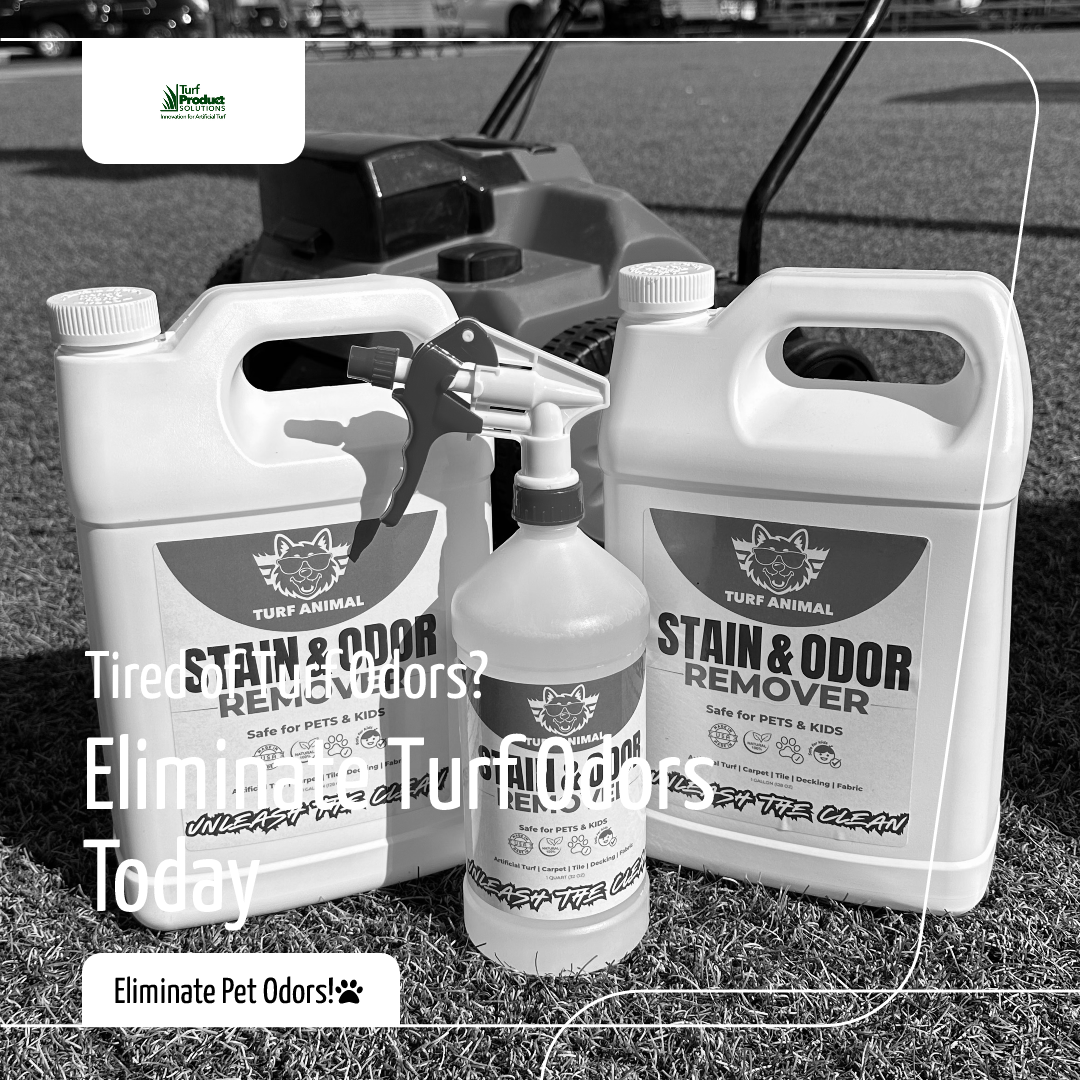
Tired of Turf Odors? Eliminate Turf Odors Today. View all products: https://turfproductsolutions.com/pages/quick-buy-1
Systematic Maintenance Steps
- Identify hotspots: Locate areas where pets frequently urinate.
- Apply Turf Animal: Saturate the area to ensure the enzymes reach the backing and sub-base.
- Wait: Allow the live enzymes to consume the urea.
- Repeat: In extreme summer heat (over 95°F), increase frequency of application.
LOADING_BIO_CLEANER... 100%
Technical Summary
- Temperature: Summer heat (120°F+) increases chemical reaction speeds.
- Chemistry: Urea converts to ammonia gas (NH3) via bacterial urease.
- Physics: High temps cause faster volatilization (off-gassing).
- Solution: Bio-enzymatic breakdown via Turf Animal + ZapGuard.
For more technical information on turf maintenance, visit our about page: https://turfproductsolutions.com/pages/about-us
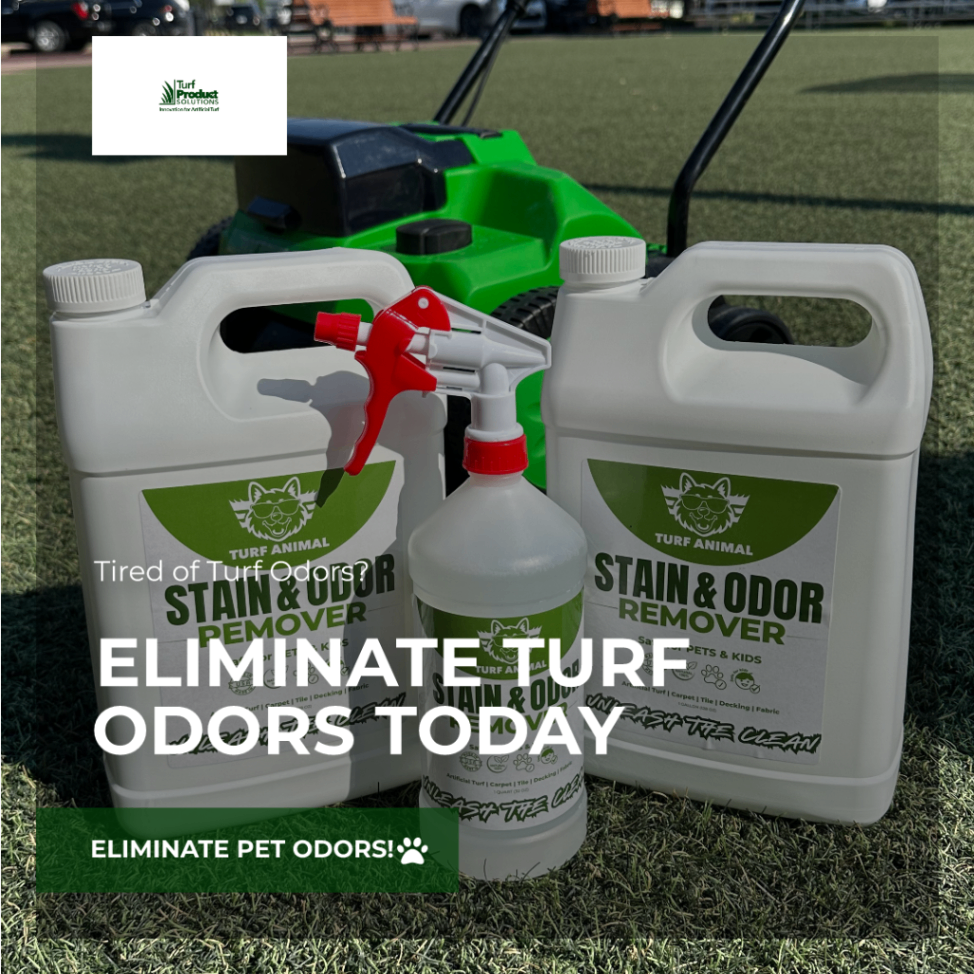
Frequently Asked Questions (Technical)
Q: Can I just hose down the turf? A: Water cools the turf temporarily but does not remove urea. It can actually spread the urea deeper into the base.
Q: Is Turf Animal safe for my pets? A: Yes. The formula is organic and safe for both pets and children once applied.
Q: Why did my turf start smelling as soon as the sun hit it? A: This is thermal volatilization. The heat turned the trapped liquid/salt into a gas.
Eliminate Turf Odors Today. Eliminate Turf Odors Today.
Final System Check
If your artificial turf is producing a strong ammonia odor, your system is currently failing to manage organic waste. The combination of high solar radiation and accumulated pet waste requires a chemical intervention.
REQUIRED ACTION:
- Access: https://turfproductsolutions.com/pages/quick-buy
- Select: Turf Animal Stain & Odor Remover.
- Deploy: Systematic application across all affected zones.
Tired of Turf Odors? Eliminate Turf Odors Today.
RELOAD_SYSTEM_MAINTENANCE END_OF_REPORT

Additional Data Points
- Urea concentration: Varies by pet diet; higher protein diets lead to higher urea output.
- Synthetic Fiber Density: High-density turf traps more heat and less airflow, increasing odor concentration.
- ZapGuard Efficiency: Reduces static cling of molecules to polyethylene fibers by 85%.
For support or warranty information, please visit: https://turfproductsolutions.com/pages/support
Eliminate Turf Odors Today. Eliminate Turf Odors Today. Eliminate Turf Odors Today.
