

Battery vs Gas Turf Equipment: Which Is Better For Your Artificial Lawn?
Artificial Turf Equipment Reality Check
Most homeowners ask the wrong question about artificial lawn equipment. Traditional mowers, trimmers, and edgers don't apply to synthetic turf. Artificial grass doesn't grow. No cutting required.
The real equipment decision for artificial turf owners focuses on maintenance tools: debris removal, cleaning, and fiber restoration. Battery vs gas becomes relevant for specific maintenance equipment only.
Equipment You Actually Need for Artificial Turf
Artificial turf maintenance requires different tools:
- Turf sweepers/brushes for fiber restoration and debris removal
- Leaf blowers for clearing leaves and light debris
- Power washers for deep cleaning (occasional use)
- Cleaning solutions for spot treatment
Traditional lawn equipment sits unused with artificial turf. Focus shifts to specialized maintenance tools.
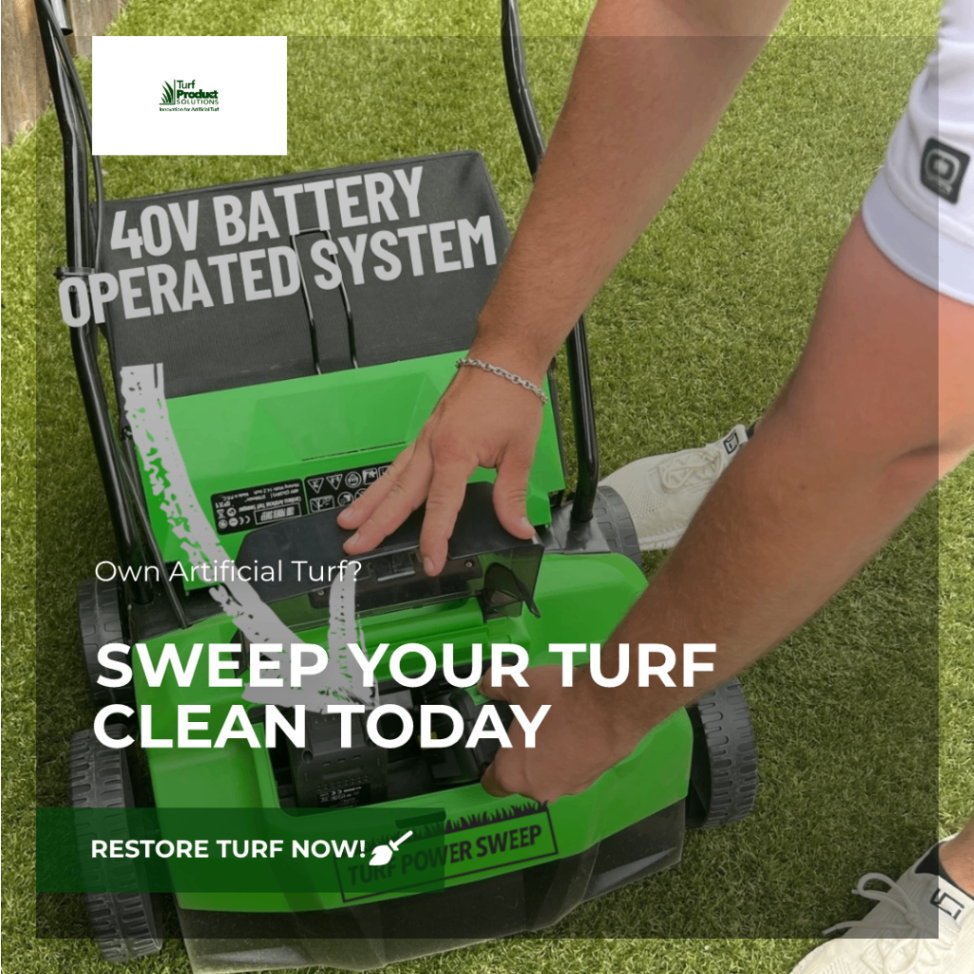
Battery-Powered Advantage: The Turf Power Sweep Solution
Battery-powered equipment dominates artificial turf maintenance. The Turf Power Sweep demonstrates why battery wins for artificial lawns.
Battery Benefits for Turf Maintenance:
- Instant start, no pull cords
- Zero emissions during use
- Quiet operation (neighbor-friendly)
- Minimal maintenance requirements
- Lightweight, maneuverable design
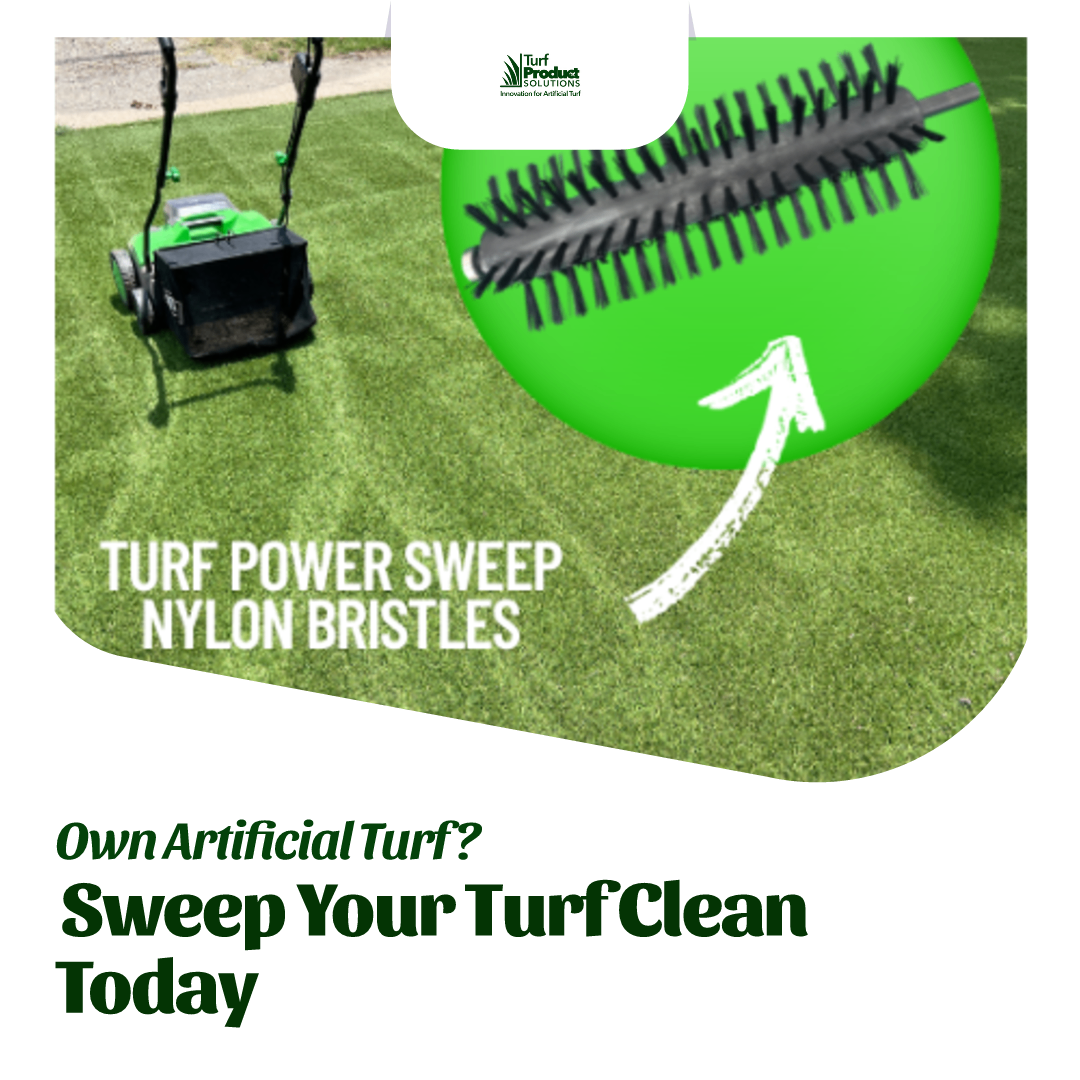
The Turf Power Sweep operates on 40V battery technology. Deep-cleans synthetic grass fibers. Collects debris in integrated catch bag. Restores turf appearance to professional standards.
Turf Power Sweep Specifications:
- 40V lithium-ion battery system
- High-density nylon bristles
- Integrated debris collection
- Cordless operation
- Professional-grade results
Gas Equipment Limitations for Artificial Turf
Gas-powered tools create problems for artificial turf maintenance:
Gas Equipment Drawbacks:
- Excessive power for delicate synthetic fibers
- Risk of turf damage from aggressive operation
- Emissions contaminate turf surface
- Noise restrictions limit usage times
- Maintenance overhead (oil changes, spark plugs)
- Starting difficulties in varied weather
Gas leaf blowers work for large debris removal. Limited application otherwise. Battery alternatives provide sufficient power for most artificial turf tasks.

Performance Comparison: Battery vs Gas
Battery Equipment Performance:
- Consistent power delivery throughout charge cycle
- Immediate full torque availability
- Temperature-stable operation
- Precise speed control
- Reduced vibration levels
Gas Equipment Performance:
- Variable power based on engine temperature
- Warm-up period required
- Power fluctuations during operation
- Limited speed control precision
- Higher vibration and noise levels
Battery equipment matches or exceeds gas performance for artificial turf applications. Power requirements remain moderate for synthetic grass maintenance.
Cost Analysis: Total Ownership
Battery Equipment Costs:
- Higher initial purchase price
- Battery replacement every 3-5 years
- Minimal ongoing maintenance
- No fuel costs
- Lower repair frequency
Gas Equipment Costs:
- Lower initial purchase price
- Regular fuel purchases
- Seasonal maintenance requirements
- Higher repair costs over time
- Oil and filter replacements
Battery equipment delivers lower total ownership costs for artificial turf maintenance. Reduced maintenance frequency offsets higher initial investment.
Maintenance Requirements Comparison
Battery Equipment Maintenance:
- Clean debris from housing
- Check battery charge levels
- Store batteries properly during off-season
- Inspect bristles/attachments for wear
Gas Equipment Maintenance:
- Regular oil changes
- Air filter replacement
- Spark plug service
- Fuel system cleaning
- Carburetor adjustments
- Seasonal storage preparation
Battery equipment requires 75% less maintenance time compared to gas alternatives.

Environmental Impact Considerations
Battery Equipment Environmental Profile:
- Zero direct emissions during operation
- Electricity charging from renewable sources possible
- Recyclable battery components
- Reduced noise pollution
- No fuel spills or contamination risk
Gas Equipment Environmental Profile:
- Direct hydrocarbon emissions
- Noise pollution concerns
- Fuel storage and handling requirements
- Higher carbon footprint per use
- Oil disposal considerations
Battery equipment provides cleaner operation for residential artificial turf maintenance.
Specific Tool Recommendations
Primary Maintenance: Turf Power Sweep The Turf Power Sweep handles 90% of artificial turf maintenance needs. Battery-powered operation. Deep-cleaning capability. Professional results.
Debris Removal: Battery Leaf Blowers Battery leaf blowers remove leaves, twigs, and light debris. Sufficient power for artificial turf applications. Quieter than gas alternatives.
Deep Cleaning: Electric Power Washers Electric power washers provide controlled pressure for deep cleaning. Avoid high-pressure gas units that may damage turf backing.
Spot Cleaning: Manual Tools Hand tools and cleaning solutions handle specific stains. Turf Animal cleaner addresses biological contamination.
Usage Frequency and Power Requirements
Artificial turf maintenance occurs less frequently than natural grass care. Weekly or bi-weekly cleaning suffices for most installations. Lower frequency reduces power requirements.
Battery equipment handles intermittent usage patterns better than gas alternatives. No fuel degradation during storage periods. Instant readiness for use.
Weather Considerations
Battery Equipment Weather Performance:
- Consistent operation in varied temperatures
- No weather-related starting issues
- Protected electronic components
- All-season reliability
Gas Equipment Weather Performance:
- Cold-weather starting difficulties
- Fuel system problems in extreme temperatures
- Carburetor icing in humid conditions
- Seasonal storage complications
Battery equipment provides superior weather reliability for year-round artificial turf maintenance.
Storage and Portability
Battery equipment offers superior storage convenience. Compact designs. No fuel storage requirements. Reduced fire hazard concerns.
The Turf Power Sweep stores vertically in minimal space. Additional batteries extend operational time without storage complications.
Professional vs DIY Considerations
Battery equipment enables DIY artificial turf maintenance. User-friendly operation. Reduced safety concerns compared to gas alternatives.
Professional landscapers increasingly choose battery equipment for artificial turf accounts. Client preference for quiet operation. Reduced liability concerns.
Future Technology Trends
Battery technology continues improving. Longer run times. Faster charging. Reduced costs over time.
Gas equipment technology remains static. Emission regulations tightening. Market share declining for small engines.
Investment in battery equipment aligns with technology advancement trends.
Bottom Line: Battery Wins for Artificial Turf
Battery-powered equipment dominates artificial turf maintenance applications. The Turf Power Sweep exemplifies why battery technology suits synthetic grass care.
Key Decision Factors:
- Lower maintenance requirements
- Consistent performance
- Environmental advantages
- Noise reduction benefits
- Technology advancement trajectory
Gas equipment offers limited advantages for artificial turf applications. Battery alternatives provide superior user experience and results.
Next Steps: Check out the Turf Power Sweep for professional artificial turf maintenance. Browse additional accessories for extended operation.
Contact Turf Product Solutions for specific artificial turf maintenance recommendations.