
Table of Contents
- Tools for Artificial Turf Cleaning
- How to Clean Artificial Grass With Vinegar and Baking Soda
- How to Remove Pet Odors From Artificial Grass
- Stain-Specific Troubleshooting for Artificial Grass Stains
- Artificial Grass Maintenance Schedule
- Post-Cleaning Fiber Restoration and Environmental Runoff
- Conclusion
- Frequently Asked Questions
Last Updated: October 1, 2026
Tools for Artificial Turf Cleaning
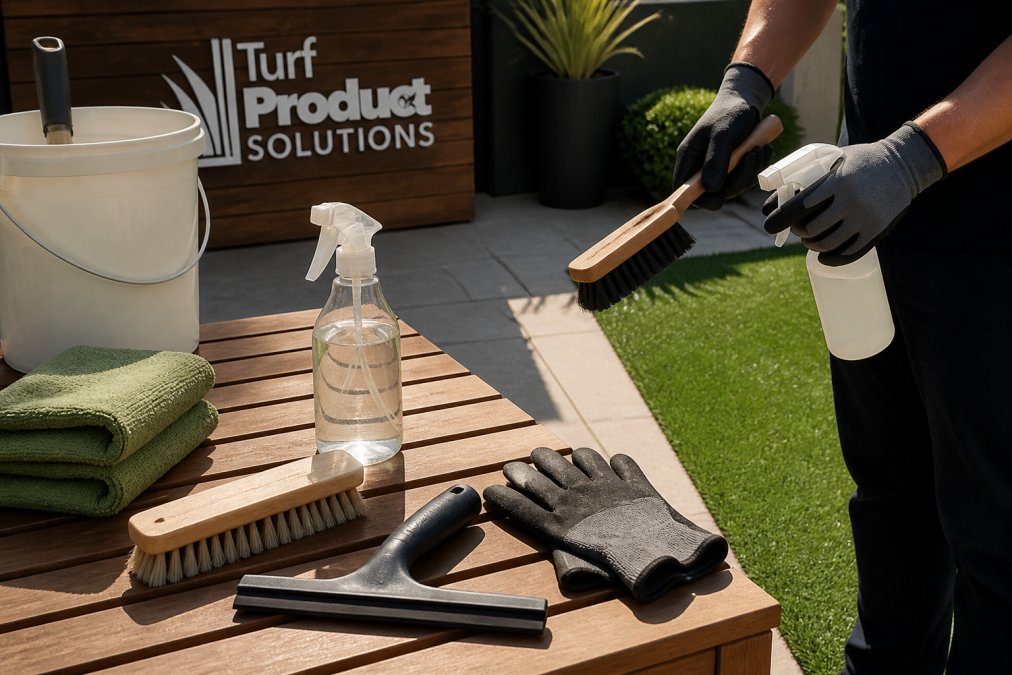
Cleaning artificial grass stains naturally starts with the right tools, not harsh chemicals. The biggest mistake homeowners make is reaching for bleach first, which damages fibers and voids warranties.
Here is what you actually need:
- Stiff bristle brush with synthetic bristles for scrubbing stains
- Hose-end sprayer for even application of cleaning solutions
- White vinegar and baking soda for natural stain removal
- pH-neutral cleaner safe for polyethylene and nylon fibers
- Battery-powered turf sweeper for surface debris and infill grooming
- Live enzyme cleaner for pet odors and organic waste
For larger jobs, a battery-powered turf broom beats gas equipment. No fumes, no pull cords, no engine maintenance. Just instant start and lightweight handling.

How to Clean Artificial Grass With Vinegar and Baking Soda
The best natural method for artificial grass stains combines diluted white vinegar for mineral deposits and baking soda paste for organic messes. This two-part approach handles most household stains without harsh chemicals. But the ratio and dwell time are not universal, they depend on the fiber your turf is made from.
Know Your Fiber Before You Pour
Most residential synthetic turf uses one of two polymers, and they do not respond the same way to acid:
- Polyethylene (PE) is the most common face fiber. It is soft, UV-stable, and reasonably tolerant of diluted acetic acid. A 1:1 vinegar-and-water mix is safe for short contact.
- Nylon is denser and more resilient under foot traffic, but it is more sensitive to prolonged acid exposure. Nylon also absorbs more moisture, so residue can linger in the backing. Keep vinegar contact to the low end of the range and rinse twice.
- Polypropylene (PP) is the least common face fiber and the most chemically inert. It tolerates vinegar well but has lower UV resistance, so avoid abrasive scrubbing that opens the surface to sun damage.
If you do not know your fiber type, check the manufacturer's warranty card or the backing label. When in doubt, test a hidden corner first and wait 24 hours before treating the visible area.
Diluted White Vinegar for Hard Water Stains
Mix one part white vinegar with one part water. Spray the affected area. Let it sit for 10 to 15 minutes, no longer on nylon.
The acid in vinegar dissolves the calcium and magnesium carbonate that hard water leaves behind. Those minerals bond to the fiber surface and to the infill, which is why a plain hose rinse will not lift them. Then rinse thoroughly with a garden hose. On nylon, follow with a second rinse to flush any residual acid out of the backing.
This ratio is the industry standard for light to moderate buildup, according to Turf Fresh maintenance guidance.
Baking Soda Paste for Organic Stains
Mix three parts baking soda with one part water. Apply the paste to the stain. Let it sit for 15 minutes.
What the Runoff Does to Your Yard
Whatever you spray on the turf eventually leaves it. Vinegar, baking soda, and soapy water all rinse into the soil at the edge of the lawn or into a storm drain. Diluted vinegar at a 1:1 ratio is generally safe for established turfgrass and ornamentals at the volumes used for spot treatment, but repeated whole-lawn applications can shift soil pH over time.
A few practical guardrails:
(1 Gallon) Turf Animal ORIGINAL →
- Spot-treat rather than broadcast. The smaller the treated area, the smaller the runoff footprint.
- Direct rinse water toward a planted border rather than a driveway that drains to the street.
- Skip cleaning within 24 hours of a forecast rain, so runoff is not carried off-site.
- Choose biodegradable, plant-based enzyme products for pet and organic waste, since those break down rather than persist.
How to Remove Pet Odors From Artificial Grass
Pet odors need enzyme cleaners, not just surface washing. Urine soaks into the backing and infill, where hose water cannot reach. Ammonia builds up over time and causes that lingering smell.
Stain-Specific Troubleshooting for Artificial Grass Stains
Different stains need different treatments. Using the wrong method can set the stain or damage fibers. This matrix pairs each stain with the mechanism that actually removes it, the fiber types it is safe for, and the step most guides skip, restoring the fiber afterward.
| Stain Type | Treatment | Dwell Time | Safe Fibers | Watch Out For |
|---|---|---|---|---|
| Hard water | 1:1 vinegar and water | 10-15 min | PE, PP; short contact on nylon | Rinse fully; double-rinse nylon |
| Pet urine | Live enzyme cleaner | Per label | All | Repeat weekly; soak backing, not just surface |
| Food and drink | Baking soda paste | 15 min | All | Scrub gently; rinse before it dries |
| Chewing gum | Ice cube, then scrape | 5 min | All | Do not pull; freeze until brittle |
| Grease or oil | Mild dish detergent, 1 tsp per quart | 5 min | All | Avoid over-wetting; blot, do not scrub |
| Mold or mildew | Vinegar spray, then dry | 10 min | PE, PP; short contact on nylon | Improve drainage; do not seal in moisture |
| Red wine | Baking soda paste, then diluted vinegar | 15 min | All | Treat immediately; tannins set with heat |
| Paint or marker | Denatured alcohol on a rag | 1-2 min | PE, PP | Test first; nylon can dull |
| Rust | Oxalic acid gel (spot only) | 5 min | PE, PP | Never on nylon; rinse heavily |
| Blood | Cold water flush, then enzyme | 10 min | All | Never hot water; heat sets protein |
Why the Mechanism Matters
A stain is held to the fiber by one of three forces: adhesion (surface residue), absorption (dye into the polymer), or chemical bonding (minerals or proteins). Vinegar works on mineral bonding. Baking soda works on adhesion and mild acid neutralization. Enzymes work on the proteins and uric acid crystals in pet waste. Matching the mechanism to the stain is what separates a clean result from a set stain.
Restore the Fiber After You Clean
Scrubbing mats the blades and pushes infill to the sides. After any spot treatment, brush the area against the natural lay of the fiber, then back with it. A stiff bristle brush or a battery-powered turf broom lifts the blades and redistributes infill evenly. Skipping this step is why some lawns look clean but flat after treatment.
Artificial Grass Maintenance Schedule
A simple routine prevents most stains from setting in. Research from MDPI's sustainability study on artificial turf notes that turf surfaces show higher abrasion rates than natural grass, especially in heat. Consistent care keeps fibers intact.
| Frequency | Task | Time Needed |
|---|---|---|
| Weekly | Remove surface debris, spot-treat stains | 15 min |
| Monthly | Rinse entire lawn, check drainage | 30 min |
| Quarterly | Deep clean with enzyme product | 1 hour |
| Seasonally | Brush up matted fibers, add infill | 1-2 hours |
Post-Cleaning Fiber Restoration and Environmental Runoff
After cleaning, restore the fibers. Brushing lifts matted blades and redistributes infill. A battery-powered turf broom makes this fast without disturbing the backing.
Conclusion
Stubborn stains and pet odors can make any artificial lawn look tired. Turf Product Solutions offers eco-safe enzyme cleaners that break down waste at the source, plus battery-powered sweepers that restore fiber loft without noise or fumes. Shop Turf Animal and the Turf Power Sweep to keep your turf clean, odor-free, and family-safe year-round.
Frequently Asked Questions
Can I use vinegar to clean artificial grass?
Yes, diluted white vinegar is safe and effective for many artificial grass stains. Mix one part white vinegar with one part water, apply to the stain, let it sit for 10-15 minutes, then rinse thoroughly. This ratio works well for hard water mineral deposits and light organic stains. Avoid undiluted vinegar, which can be too acidic over time. For best results, follow with a pH-neutral enzyme cleaner to break down remaining organic matter without damaging synthetic fibers.
What is the best natural cleaner for artificial turf?
A pH-neutral enzyme cleaner like Turf Animal is the top choice for artificial turf because it digests pet waste, urine, and organic matter at the source without harsh chemicals. For DIY options, a 1:1 mix of white vinegar and water handles hard water stains, while a baking soda paste tackles organic spills. Always avoid chlorine bleach and caustic cleaners, which can degrade turf fibers and harm pets. Enzyme cleaners are pet-safe and eco-friendly, making them ideal for dog runs and family yards.
How do you get stubborn stains out of fake grass?
For stubborn stains, pre-treat with a 1:1 white vinegar solution for 10-15 minutes, then scrub gently with a stiff bristle brush. If the stain persists, apply a baking soda paste and let it sit before rinsing. For pet waste or organic stains, use a live enzyme cleaner like Turf Animal, which breaks down odor-causing bacteria at a molecular level. Always rinse the area thoroughly and avoid pressure washing, which can damage infill and fibers.
Is baking soda safe for artificial grass?
Baking soda is safe for artificial grass when used as a paste or sprinkled lightly. It is mildly alkaline and won't harm synthetic fibers. To treat stains, mix baking soda with water to form a paste, apply to the spot, let it sit for 10 minutes, then rinse. Baking soda also helps neutralize odors. However, avoid leaving heavy residues, as they can attract dirt. For routine cleaning, combine baking soda with a pH-neutral enzyme cleaner for best results.