
Struggling With Pet Odors? 5 Steps to Deodorize Your Dog Facility (Easy Guide)
![[HERO] Struggling With Pet Odors? 5 Steps to Deodorize Your Dog Facility (Easy Guide)](https://cdn.marblism.com/Q25eVhdcpuM.webp)
Artificial turf in high-traffic dog facilities requires systematic maintenance to manage uric acid, ammonia, and fecal bacteria. Failure to implement biological cleaning protocols results in permanent odor saturation and aesthetic degradation. This guide provides functional instructions for deodorizing dog facilities using Turf Animal organic enzyme technology.
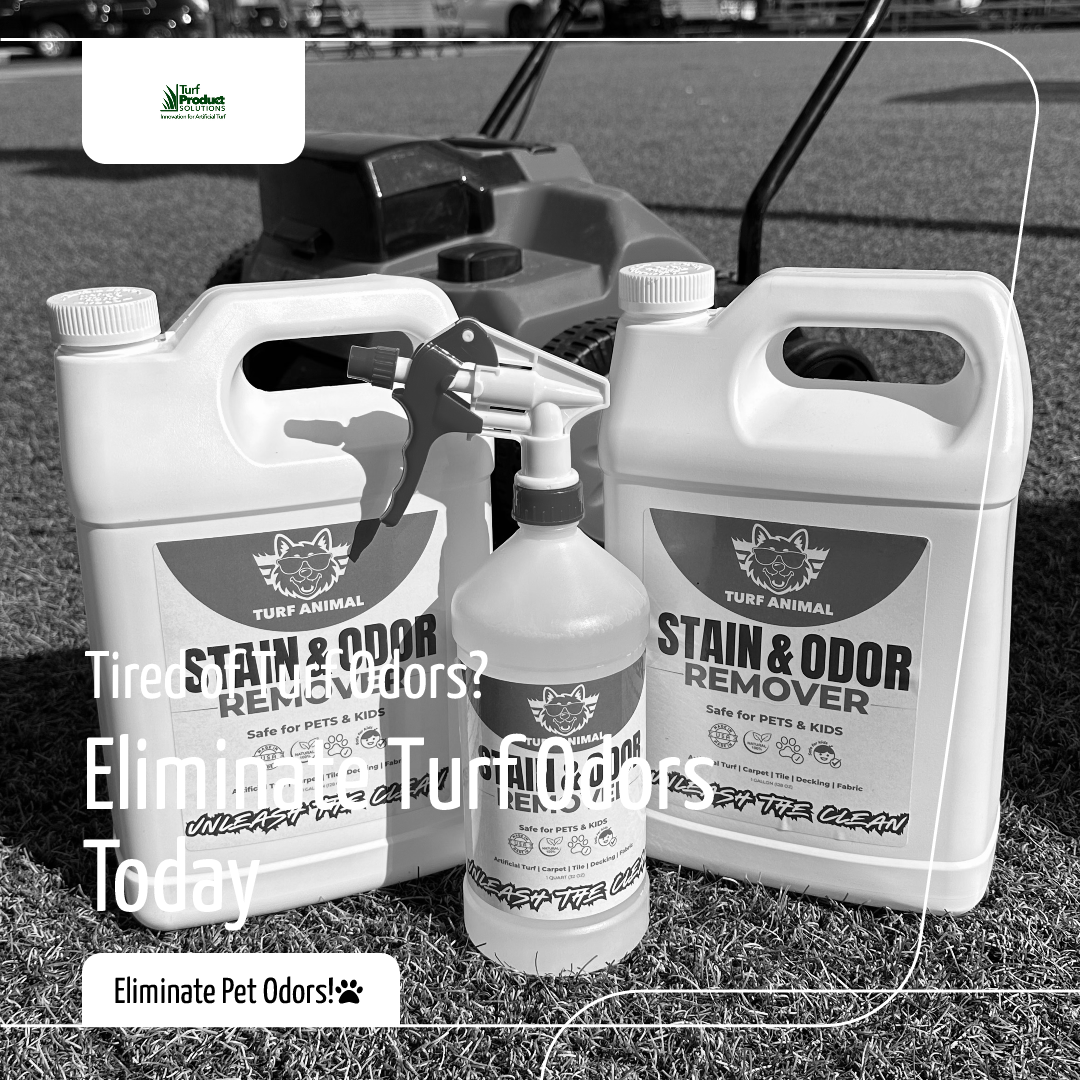
Eliminate Turf Odors Today.
Step 1: Physical Waste Extraction and Debris Removal
Before applying liquid treatments, remove all solid waste from the turf surface.
- Locate solid matter.
- Use standard disposal tools.
- Flush the area with water to clear top-level particulates.
- Remove organic debris (leaves, hair, mulch) that may trap moisture with the Turf Power Sweep. www.turfpowersweep.com
Step 2: Solution Preparation and Dilution Ratios
Turf Animal is a concentrated organic formula. Use the following ratios for facility maintenance:
- Heavy Odor/Initial Treatment: 1 part Turf Animal to 5 parts water.
- Standard Maintenance: 1 part Turf Animal to 10 parts water.
- Light Use/Static Control: 1 part Turf Animal to 20 parts water.
Turf Animal utilizes live enzyme technology. Unlike chemical masks, enzymes catalyze the breakdown of organic waste.

Step 3: Application of Turf Animal Live Enzyme Technology
Apply the solution to the turf using a pump sprayer or hose-end applicator. Ensure total saturation of the turf blades and the infill layer.
Instructional Sequence:
- Apply in early morning or late evening to prevent rapid evaporation.
- Target high-use "potty" zones.
- Ensure the solution reaches the base of the turf fibers.
- Do not rinse immediately. Enzymes require contact time to consume nitrogenous waste.
Product Benefit: Live Enzyme Action
Traditional cleaners use surfactants to move dirt. Turf Animal uses live bacteria that produce enzymes. These enzymes specifically target the proteins found in pet waste.
Eliminate Turf Odors Today.
Step 4: Zap Guard Integration and Static Control
High-traffic dog facilities experience friction-generated static electricity. This can startle animals and cause behavioral issues.
Zap Guard Technology:
Turf Animal includes Zap Guard, a specialized static control agent.
- Function: Neutralizes surface charges.
- Benefit: Increases pet comfort during play.
- Application: Applied simultaneously with the deodorizing solution.
Check out the full product specifications: https://turfproductsolutions.com/sitemap_products_1.xml.
Step 5: Maintenance Scheduling and Loading Protocols
Systematic repetition of cleaning protocols ensures long-term facility hygiene.
Maintenance Log Template:
- Daily: Spot treat high-use areas.
- Weekly: Full facility spray with Turf Animal (1:10 dilution).
- Monthly: Deep extraction and infill agitation.

Technical Comparison: Enzymes vs. Traditional Cleaners
| Feature | Traditional Cleaners | Turf Animal (Live Enzymes) |
|---|---|---|
| Method | Chemical Masking | Biological Degradation |
| Residual Effect | None | Continuous while moist |
| Static Control | None | Zap Guard Included |
| Safety | Harsh Chemicals | Pet and Kid Safe |
| Environmental | High Impact | Organic / Biodegradable |
Eliminate Turf Odors Today.
Advanced Odor Management for Boarding Facilities
In professional boarding environments, the concentration of urea is significantly higher than in residential settings. Turf Animal’s live enzymes are designed to stay active in the infill, continuing to digest waste as long as moisture is present.
- Infiltration: Enzymes penetrate the backing of the turf.
- Digestion: Bacteria consume urea and ammonia.
- Neutralization: Odor molecules are converted into water and carbon dioxide.
- Protection: Zap Guard prevents static buildup on synthetic fibers.
Frequently Asked Questions (Technical Data)
Is Turf Animal safe for all turf types?
Yes. The organic formula is compatible with polyethylene, polypropylene, and nylon fibers. It does not degrade turf backing.
How often should I apply the product?
In dog facilities, a weekly application is the standard operating procedure. For residential users with 1-2 dogs, bi-weekly or monthly application is sufficient.
Where can I find wholesale pricing for my facility?
Visit our wholesale portal: https://turfproductsolutions.com/pages/wholesale.
Does it work on other surfaces?
Turf Animal is effective on carpet, tile, decking, and fabric.
Eliminate Turf Odors Today.
Functional Checklist for Facility Managers
- Inspect turf for solid waste.
- Verify Turf Animal inventory levels.
- Calibrate dilution ratios for current odor levels.
- Schedule application during low-traffic periods.
- Confirm Zap Guard application for static prevention.
The Role of Zap Guard in Dog Daycares
Static electricity on artificial turf is a common complaint in dry climates or during winter months. As dogs run across synthetic fibers, they build up a charge. When they touch a metal gate or another dog, a discharge occurs.
Zap Guard Specification:
- Reduces surface tension.
- Dissipates electrical charge.
- Integrated into the Turf Animal formula for single-step application.

Conclusion of Deodorization Protocol
Effective odor management requires moving beyond surface-level cleaning. By implementing a biological solution like Turf Animal, facility owners address the root cause of smells; organic decomposition.
Product Summary:
- Technology: Live Enzymes + Zap Guard.
- Application: Easy spray-on, leave-in.
- Outcome: Clean, static-free, odor-neutral turf.
For further information on maintenance equipment, see: https://turfproductsolutions.com.
Eliminate Turf Odors Today.
Eliminate Turf Odors Today.
Eliminate Turf Odors Today.

Back to Main Site: https://turfproductsolutions.com/sitemap.xml
Contact Support: https://turfproductsolutions.com/pages/contact
Review FAQs: https://turfproductsolutions.com/pages/faqs