

Table of Contents
- Why Shaded Artificial Turf Needs a Different Maintenance Routine
- Drainage and Moisture Management in Low-Light Yards
- Artificial Turf Mold Prevention: Stopping Mildew Before It Starts
- How to Remove Moss from Artificial Grass
- Best Artificial Turf Cleaning Tools for Shaded Lawns
- Enzyme Cleaners for Synthetic Turf: Odor and Bacteria Control
- Vegetation Management Around Turf Edges and Airflow
- Conclusion: A Shade-Specific Maintenance Schedule That Works
- Frequently Asked Questions
Last Updated: October 3, 2026
Why Shaded Artificial Turf Needs a Different Maintenance Routine
Shade changes everything about how to maintain artificial turf in shaded areas. Without sunlight and airflow, the surface stays damp for hours after rain.

That moisture feeds mold, mildew, moss, and bacteria, and traps pet odors in ways a sunny lawn never would.
The core idea behind how to maintain artificial turf in shaded areas: less water, more airflow, and more frequent debris removal than a sunny lawn.
Drainage and Moisture Management in Low-Light Yards
Drainage is the first thing to fix in a shaded yard. Without it, every other maintenance step becomes harder.
Shorter turf blades drain better than longer ones, according to MDPI's 2025 artificial turf runoff study, though both still shed water more slowly than natural grass.
Check these three things:
- Sub-base stability: Compacted crushed stone should sit at least 3-4 inches deep. Soft spots mean poor drainage.
- Permeability: Pour a bucket of water on the turf. If it pools for more than a few minutes, your backing or infill is clogged.
- Moisture retention: Damp conditions in shade keep fibers wet longer. Trim back overhanging branches to let air move across the surface.
A hose rinse clears surface debris blocking water flow; for deeper clogs, a stiff brush opens the fiber mat.
Artificial Turf Mold Prevention: Stopping Mildew Before It Starts
Artificial turf mold prevention comes down to three habits: dry the surface, remove organic matter, and treat problem zones before spores take hold.
Mildew prevention starts with airflow, your best defense in shaded yards. Trim shrubs, remove leaf piles, and avoid leaving furniture on the turf for long periods.
Next, manage organic matter: leaves, grass clippings, and pet waste feed bacterial growth. A leaf blower or turf broom clears this in minutes.

Watch for these warning signs:
- Black or gray patches near edges and low spots
- A sour or musty odor after rain
- Slimy texture on the fiber surface
Catch these early to avoid a full remediation job.
Step-by-Step Mold Remediation for Turf That Already Has Mildew
If mildew has already taken hold, here's how to remove it without damaging your turf:
- Clear all debris. Remove leaves, twigs, and pet waste with a turf broom or leaf blower.
- Brush the affected area. Use a stiff-bristle brush to lift fibers and expose the mold.
- Apply an enzyme cleaner. Spray a pet-safe enzyme formula directly on the affected zone.
- Let it sit for 10-15 minutes. The enzymes need time to break down organic matter.
- Rinse thoroughly. Flush the area with water until runoff runs clear.
- Dry and aerate. Trim nearby vegetation and let the sun in where possible.
- Repeat if needed. Stubborn patches may need a second treatment within a week.
Expected result: After one or two treatments, the mold smell fades and fibers return to their original color.
How to Remove Moss from Artificial Grass
Moss is the most persistent biological problem in shaded synthetic turf. On a living lawn it competes with grass for light and nutrients; on artificial turf it has no competition and anchors directly to the backing and infill, where moisture lingers longest. That's why brushing alone rarely solves it.
Why Moss Takes Hold on Synthetic Turf
Three conditions drive moss colonization in shade:
- Persistent surface moisture. Without sun and airflow, dew and rain sit on the backing for hours. Moss needs only a damp surface, not standing water.
- Organic buildup. Decomposing leaves, pollen, and grass clippings create a thin soil-like layer that moss roots into.
- Low pH and compacted infill. Moss favors acidic, compacted conditions. If your infill hasn't been brushed or topped off in over a year, it's likely compacted enough to support moss growth.
Removal without addressing these drivers guarantees the moss returns within weeks.
Step-by-Step Moss Removal
- Dry-brush first. Use a stiff-bristle turf brush or power broom in two perpendicular passes to break the moss's grip and lift matted fibers. Work when the turf is dry, wet moss smears rather than lifts.
- Apply a diluted vinegar solution. Mix 1 part white vinegar to 3 parts water in a pump sprayer. Apply directly to moss patches and let it sit 15-20 minutes; the acetic acid breaks down moss cell structure without damaging synthetic fibers.
- Rinse thoroughly. Flush with a hose until runoff runs clear. Vinegar residue left in the infill can attract new growth.
- Brush again after drying. A second pass removes dead moss and re-lifts fibers.
- Top off infill. Add fresh infill to any low spots where moss was growing. Compacted, low infill is where moss returns first.
Preventing Moss from Coming Back
Removal is only half the job. Prevention is where most homeowners fall short.
- Improve drainage at the edges. Moss often starts at the perimeter where soil meets turf. A weed barrier installed 2-3 inches below grade stops roots and moss from creeping under the backing.
- Increase airflow. Trim shrubs and low branches within 2-3 feet of the turf edge. Even a few hours of daily air movement makes the surface inhospitable to moss.
- Manage pH. If moss returns repeatedly, test the soil pH around the turf perimeter. Moss thrives in acidic conditions. Amending surrounding soil with lime can reduce spore pressure from adjacent areas.
When to Call a Professional
Expected result: After one thorough treatment and consistent monthly brushing, moss should not return within the same growing season. If it does, the underlying moisture problem has not been solved.
Best Artificial Turf Cleaning Tools for Shaded Lawns
The best artificial turf cleaning tools for shaded lawns are cordless, lightweight, and built to handle damp debris; gas equipment adds fumes and noise without real cleaning power.
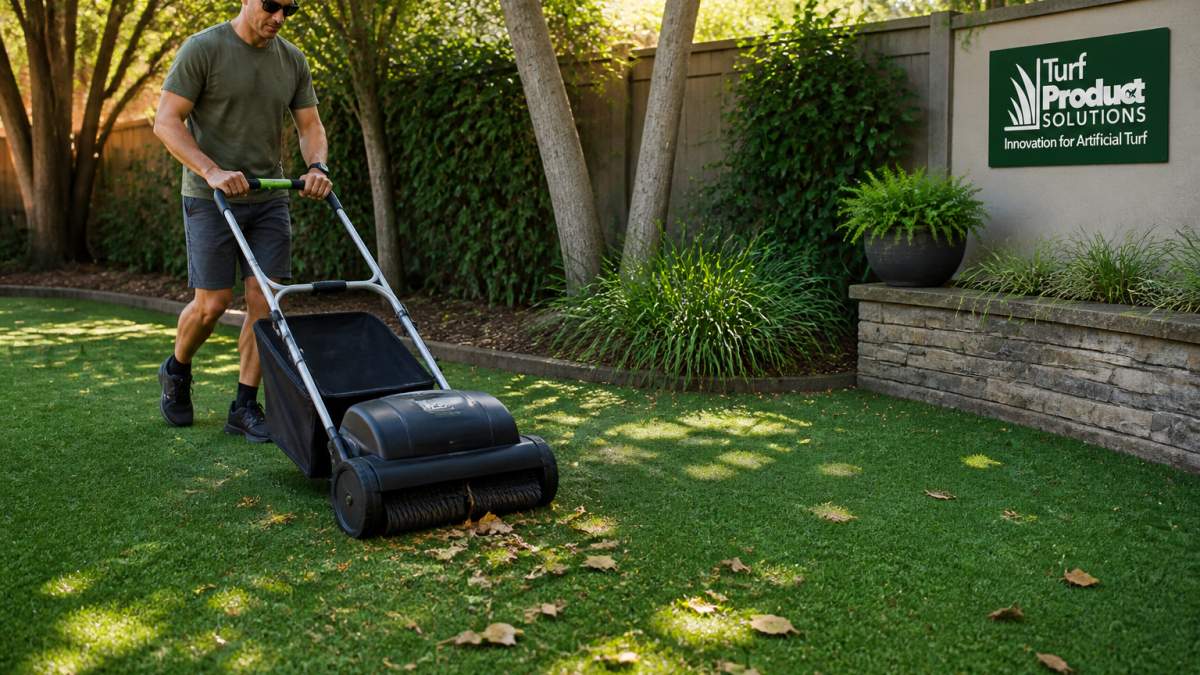
A battery-powered turf broom, like the Turf Power Sweep™ MAX, lifts flattened fibers and collects leaves, pet hair, and dirt in one pass.
For tighter spots, the Fiber Lift Pro uses the same 20V battery system and a 17.3-inch brush head to clean along fences and edges. It costs $289.95.
Here's how the two compare:
Turf Power Sweep™ MAX + FREE Turf Power Jet™ →
| Tool | Best For | Key Feature | Price |
|---|---|---|---|
| Turf Power Sweep™ MAX | Full lawns, pet areas | Sweep and collect in one pass | $589.95 |
| Fiber Lift Pro | Edges, tight corners | 17.3" brush head, precision control | $289.95 |
Battery-Powered vs. Gas Equipment: Which Makes Sense for Shade
Battery-powered gear wins for shaded yards: instant start, zero fumes, no engine maintenance. Gas sweepers are heavier, louder, and need fuel and oil changes.
For damp, low-light turf, the lighter tool is also safer. You can move quickly around wet patches without slipping or stalling.
Enzyme Cleaners for Synthetic Turf: Odor and Bacteria Control
Enzyme cleaners for synthetic turf break down the source of odors instead of masking them.
Turf Animal ORIGINAL uses plant-based enzymes and natural surfactants. It's pH-balanced to protect synthetic fibers and free of sulfates, dyes, and synthetic perfumes.

Apply it after debris removal, let it sit, then rinse. For dog runs and kennels, this is the step that keeps odors from returning.
Vegetation Management Around Turf Edges and Airflow
Vegetation management is the most overlooked part of shaded turf care and the cheapest mold prevention you'll ever do. Overgrown shrubs, low branches, and tall ornamental grasses block the airflow that keeps turf dry; without it, moisture sits on the backing for hours, exactly where mold, moss, and bacteria establish.
How Airflow Actually Works on a Shaded Lawn
Air movement across artificial turf evaporates surface moisture and equalizes temperature between turf and surrounding air. In full sun the sun does most of this work; in shade, wind is your only tool.
A common pattern in shaded yards: turf near a fence or under a dense tree canopy stays damp 2-3 hours longer than turf in the open, enough for mold spores to germinate.
The 2-3 Foot Rule
Trim back anything within 2-3 feet of the turf edge. This includes:
- Shrubs and hedges. Cut them back to at least 3 feet from the turf perimeter. This opens a wind channel along the edge where moisture accumulates first.
- Tree limbs. Remove low-hanging branches below 6 feet. This allows cross-breezes to move across the surface.
- Ornamental grasses. These trap moisture and drop debris directly onto the turf. Either remove them or relocate them at least 4 feet from the edge.
Weed Barriers: What Works and What Doesn't
Not all weed barriers perform the same in shaded, damp conditions.
| Barrier Type | Best For | Lifespan | Notes |
|---|---|---|---|
| Woven landscape fabric | Perimeter weed control | 5-10 years | Permeable; allows some airflow |
| Non-woven geotextile | High-moisture edges | 10-15 years | Better drainage; resists rot |
| Solid plastic edging | Physical root block | 15+ years | No permeability; can trap moisture |
| Rubber edging | Clean lines, low profile | 10+ years | Flexible; good for curved edges |
Install the barrier vertically, not flat: a vertical barrier 4-6 inches deep stops roots and moss creeping under the backing, while flat barriers only suppress weeds from above and don't stop lateral spread.
Monthly Edge Inspection Checklist
Walk the perimeter once a month and check for:
- Weeds breaking through. Pull by hand before they establish.
- Moss at the edges. Moss starts at the perimeter and spreads inward. Catching it at the edge takes minutes; catching it mid-lawn takes hours.
- Barrier exposure. If the weed barrier is visible above the turf surface, it's been displaced. Push it back down or re-secure it.
The Payoff
Vegetation management isn't glamorous, but it's the highest-leverage maintenance task in a shaded yard. A clean edge with good airflow reduces mold pressure, moss growth, and odor retention at once, and makes every other step easier.
Expected result: After trimming vegetation and installing a vertical weed barrier, you should notice the turf drying 1-2 hours faster after rain. That drying speed is your best indicator that airflow has improved.
Conclusion: A Shade-Specific Maintenance Schedule That Works
Shaded turf fails when moisture sits too long. Fix drainage, clear debris weekly, treat odors with enzymes, and keep vegetation trimmed back.
Here's a simple schedule to follow:
| Task | Frequency | Tool |
|---|---|---|
| Debris removal | Weekly | Turf Power Sweep™ MAX |
| Edge and corner cleaning | Biweekly | Fiber Lift Pro |
| Enzyme treatment | Monthly | Turf Animal ORIGINAL |
| Vegetation trimming | Monthly | Hand pruners |
| Drainage check | Quarterly | Hose and visual inspection |
For deeper guidance, Nick Ogilvie's Artificial Turf Owners Manual covers the five enemies of artificial turf and how to defeat each one.
Shaded turf will always need more attention than a sunny lawn, but the right tools make it manageable.
Frequently Asked Questions
Does artificial grass grow mold in shaded areas?
Mold and mildew can develop on artificial turf in shaded areas because moisture lingers longer without sun to dry the surface. The risk increases when leaves and organic matter sit on the turf, trapping dampness against the backing. Regular debris removal, improved airflow, and periodic cleaning with a pH-balanced cleaner reduce that risk. Without a consistent artificial turf maintenance routine, shaded sections can develop surface mildew within weeks, especially during humid summer months.
How often should I brush artificial turf in the shade?
Brush shaded artificial turf every two to four weeks, compared to every four to six weeks for sun-exposed lawns. Shade keeps fibers damp and flat, so they need more frequent lifting to stay upright and to prevent matting. A cordless turf sweeper with adjustable brush depth makes this faster than a manual rake. If you have pets or heavy foot traffic, brush every two weeks and redistribute infill at the same time.
What is the best cleaner for artificial turf in low-light conditions?
Plant-based enzyme cleaners are the best fit for shaded turf because they break down pet urine, bacteria, and organic residue without harsh chemicals that can degrade fibers. Look for a pH-balanced, sulfate-free formula with no synthetic dyes. One gallon of concentrated enzyme cleaner can treat up to 8,000 square feet for heavy odor areas. Apply it after debris removal so the cleaner reaches the backing where bacteria collect.
Can moss grow on artificial grass in the shade?
Moss can grow on artificial grass when moisture, shade, and organic matter combine. Moss does not root into synthetic fibers, but it spreads across the surface and into infill, making the lawn look patchy and holding more moisture. Remove it by sweeping with a stiff nylon brush, then treat the area with a cleaner that breaks down organic residue. Trimming back overhanging vegetation and clearing debris regularly keeps moss from returning.