
Table of Contents
- Why Mold Grows on Artificial Grass and How to Spot It
- Step-by-Step: How to Remove Mold from Artificial Grass Safely
- Choosing the Best Enzyme Cleaner for Artificial Grass
- Artificial Grass Mold Prevention Tips for Every Season
- How to Maintain Artificial Turf Grass: Long-Term Care and Drainage
- Common Mistakes to Avoid When Removing Mold
- When to Call a Professional
- Frequently Asked Questions
Last Updated: September 29, 2026
Why Mold Grows on Artificial Grass and How to Spot It
Learning how to remove mold from artificial grass safely starts with understanding why it grows. Mold needs three things: moisture, warmth, and organic matter. Artificial turf creates all three when water sits too long, shade blocks airflow, and leaves or pet waste stay on the surface. Turf Product Solutions has spent over two decades helping homeowners and pros solve exactly this problem, and the pattern is always the same: fix the moisture, remove the food source, and mold stops coming back.
Common Causes: Moisture, Shade, and Organic Debris
Moisture retention is the number one trigger. Turf installed over a poor sub-base traps water underneath the backing. Shaded areas dry slower, so spores settle in and spread. Organic debris like fallen leaves, pollen, and pet waste feeds the growth.
- Standing water from poor drainage or a clogged base
- Heavy shade that blocks airflow and slows drying
- Fallen leaves, grass clippings, and pollen left on the surface
- Pet urine and droppings that soak into the infill
Signs of Mold and Mildew You Shouldn't Ignore
Mildew shows up as dark patches, a musty smell, or a slick, slimy feel on the blades. Catch it early and a simple clean fixes it. Let it spread into the turf backing and you may face a much bigger job.
- Black or gray spots that don't rinse away
- A damp, earthy smell after rain
- Slimy texture when you walk across the turf
- Discoloration near pet areas or shaded corners
Step-by-Step: How to Remove Mold from Artificial Grass Safely
The safest method combines manual removal, a turf-safe cleaner, and thorough rinsing. Skip harsh chemicals and work with the surface, not against it.

What You'll Need
Gather your tools before you start. A turf maintenance guidance from Pave-n-Turf recommends low-pressure cleaning and turf-safe cleaners to protect the fibers.
- Stiff bristle brush or power broom
- Garden hose or low-pressure sprayer
- Turf-safe cleaner or mild detergent
- Distilled vinegar for light surface mold
- Gloves and a leaf blower for debris
Match Your Method to Your Turf Material
Not all synthetic turf responds the same way to cleaning. Most residential turf is polyethylene (PE), which is soft, UV-stabilized, and tolerant of mild cleaners and stiff brushing. Polypropylene (PP) is stiffer and more heat-sensitive, so keep water below 140°F and avoid aggressive scrubbing that can fray the thatch. Nylon is the most durable and heat-resistant, but it absorbs less and dries faster, so mold tends to sit on the surface rather than soak in.
The Cleaning Process
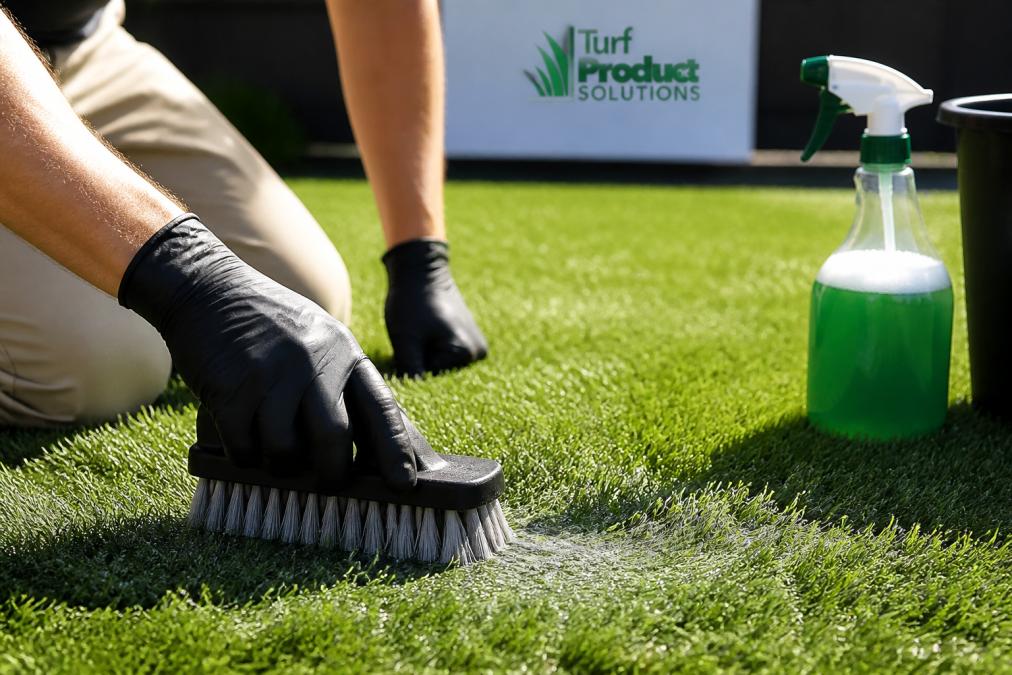
- Remove all debris first. Rake or blow away leaves, pollen, and pet waste.
- Rinse the area with low-pressure water to loosen surface mold.
- Apply your cleaner. Use a turf-safe enzyme formula or a mild vinegar solution.
- Scrub with a stiff bristle brush using a flicking motion to lift spores from the blades.
- Rinse thoroughly and let the area dry completely.
- Repeat if dark patches remain after drying.
Don't Skip the Sub-Base Check
Most guides stop at the surface, but mold that keeps returning usually means water is trapped below. After cleaning, walk the area and look for low spots where water pools after rain. If the turf feels spongy or you see standing water more than an hour after a storm, the sub-base likely has a drainage problem. You can test percolation by pouring a gallon of water on the surface and timing how long it takes to disappear; if it sits for more than a few minutes, the base is compacted or clogged.
Choosing the Best Enzyme Cleaner for Artificial Grass
The best enzyme cleaner for artificial grass breaks down organic waste at the source instead of masking it. Enzyme formulas digest pet urine, bacteria, and the organic matter mold feeds on. This is why enzyme-based cleaners are increasingly recommended over harsh chemicals for mold treatment, according to TurFresh's turf care guidance.
Here's how the main options compare:
| Cleaner Type | Best For | Watch Out For |
|---|---|---|
| Enzyme cleaners | Pet odors, organic buildup | Needs time to work |
| Mild detergent | Light surface mold | Can leave residue |
| Distilled vinegar | Small spots, pH balance | Weak on deep mold |
| Bleach | Rarely recommended | Damages synthetic fibers |
Artificial Grass Mold Prevention Tips for Every Season
Prevention beats removal every time. These artificial grass mold prevention tips keep moisture and debris from building up across the year. A consistent routine takes less than 15 minutes a week, based on 2026 maintenance guidance from DG Floors.
- Spring: Clear pollen and blossoms weekly.
- Summer: Flush high-use areas every one to two weeks.
- Fall: Remove leaves before they mat down and trap moisture.
- Winter: Improve airflow and check for standing water.
How to Maintain Artificial Turf Grass: Long-Term Care and Drainage
Knowing how to maintain artificial turf grass long term comes down to two things: airflow and drainage. If water can't move through the sub-base, mold will keep returning no matter how often you clean. This is a critical part of long-term maintenance.
(1 Gallon) Turf Animal ORIGINAL →
Inspect the Drainage System Twice a Year
Check your drainage twice a year, ideally in spring and fall. Look for low spots where water pools after rain. Flush the infill to clear compacted dust. Keep the surface porous so moisture drains instead of sitting. A simple percolation test: pour a gallon of water on the turf and time how long it takes to soak through. If it takes more than a few minutes, the base is compacted or the drainage layer is clogged.
Material-Specific Maintenance
Polyethylene turf benefits from periodic brushing to keep the blades upright and airflow moving through the thatch. Polypropylene is more prone to heat damage, so avoid cleaning during the hottest part of the day and never use steam. Nylon turf is the most forgiving but still needs infill top-offs to maintain stability. Across all materials, keep pet waste picked up daily and rinse urine spots with water to dilute the nitrogen load before it feeds mold.
Seasonal Checklist
- Spring: Clear pollen and blossoms weekly.
- Summer: Flush high-use areas every one to two weeks.
- Fall: Remove leaves before they mat down and trap moisture.
- Winter: Improve airflow and check for standing water.
Antimicrobial coatings like Microguard work continuously to inhibit bacteria and mold growth when applied as part of a routine, per Magnolia Turf's 2026 maintenance guide.
- Inspect the sub-base for clogs and low spots
- Flush infill every few weeks in high-traffic zones
- Trim back plants that block sun and airflow
- Keep pet waste picked up daily
When the Backing Is Compromised
If mold has penetrated the turf backing, you may see delamination, curling edges, or a persistent musty smell that returns within days of cleaning. At that point, surface treatment won't help. A pro can assess whether the affected section can be lifted, cleaned, and re-laid over a corrected base, or whether the turf needs replacement. Catching drainage issues early is what prevents this outcome.
Common Mistakes to Avoid When Removing Mold
A few common mistakes turn a quick fix into a costly one. The biggest is reaching for bleach. Harsh chemicals are discouraged for routine mold removal unless the manufacturer specifically requires them, because they damage synthetic fibers, per CalPro Artificial Turf's mold guidance.
- Using bleach or harsh chemicals that break down fibers
- Pressure washing at high settings that lift the infill
- Skipping the rinse, which leaves spores behind
- Cleaning without removing the debris first
- Ignoring the drainage issue that started the mold
When to Call a Professional
Call a professional when mold keeps coming back or covers large areas. If the growth has reached the turf backing or the sub-base has drainage problems, surface cleaning won't solve it. A pro can inspect the base, correct the slope, and lift sections of turf if needed. Persistent moisture issues often require a more comprehensive strategy for preventing moss growth across all outdoor surfaces to ensure the long-term integrity of your landscaping.
Frequently Asked Questions
How to get rid of mold on fake grass?
Start by removing debris with a leaf blower or rake, then apply a pet-safe enzyme cleaner like Turf Animal and scrub with a stiff bristle brush. Rinse with low pressure and let the area dry completely. For persistent mold, repeat the process or check for drainage issues. Avoid bleach, which can damage turf fibers.
Does mold grow under artificial grass?
Yes, mold can grow beneath artificial grass when moisture gets trapped in the sub-base or backing. Poor drainage, shade, and organic debris like pet waste or leaves create ideal conditions. Ensuring proper drainage during installation and regular cleaning helps prevent mold under the surface.
Is mold on artificial grass dangerous to pets?
Mold on artificial grass can be harmful to pets if ingested or if they have allergies. Symptoms may include itching, respiratory issues, or digestive upset. Using pet-safe cleaners like Turf Animal and keeping the turf dry and clean reduces risk. If mold persists, consult a veterinarian if your pet shows symptoms.
How often should you deep clean artificial turf to prevent mold?
Deep clean artificial turf every 1-2 months, or more often in humid climates or high-traffic pet areas. Weekly maintenance like removing debris and flushing with water helps prevent mold between deep cleans. Using an enzyme cleaner monthly can break down organic matter before mold develops.
Mold on artificial grass is a moisture problem first and a cleaning problem second. Fix the drainage, remove the debris, and use a turf-safe enzyme cleaner that breaks down the organic matter mold feeds on. Turf Product Solutions offers eco-safe enzyme cleaners and battery-powered turf tools built for homeowners and pros alike, so your turf stays clean, odor-free, and safe for pets and family. Get started with Turf Product Solutions and take the guesswork out of turf care.